

Influencer Marketing vs. Paid Social Ads: Choosing the Right Growth Approach

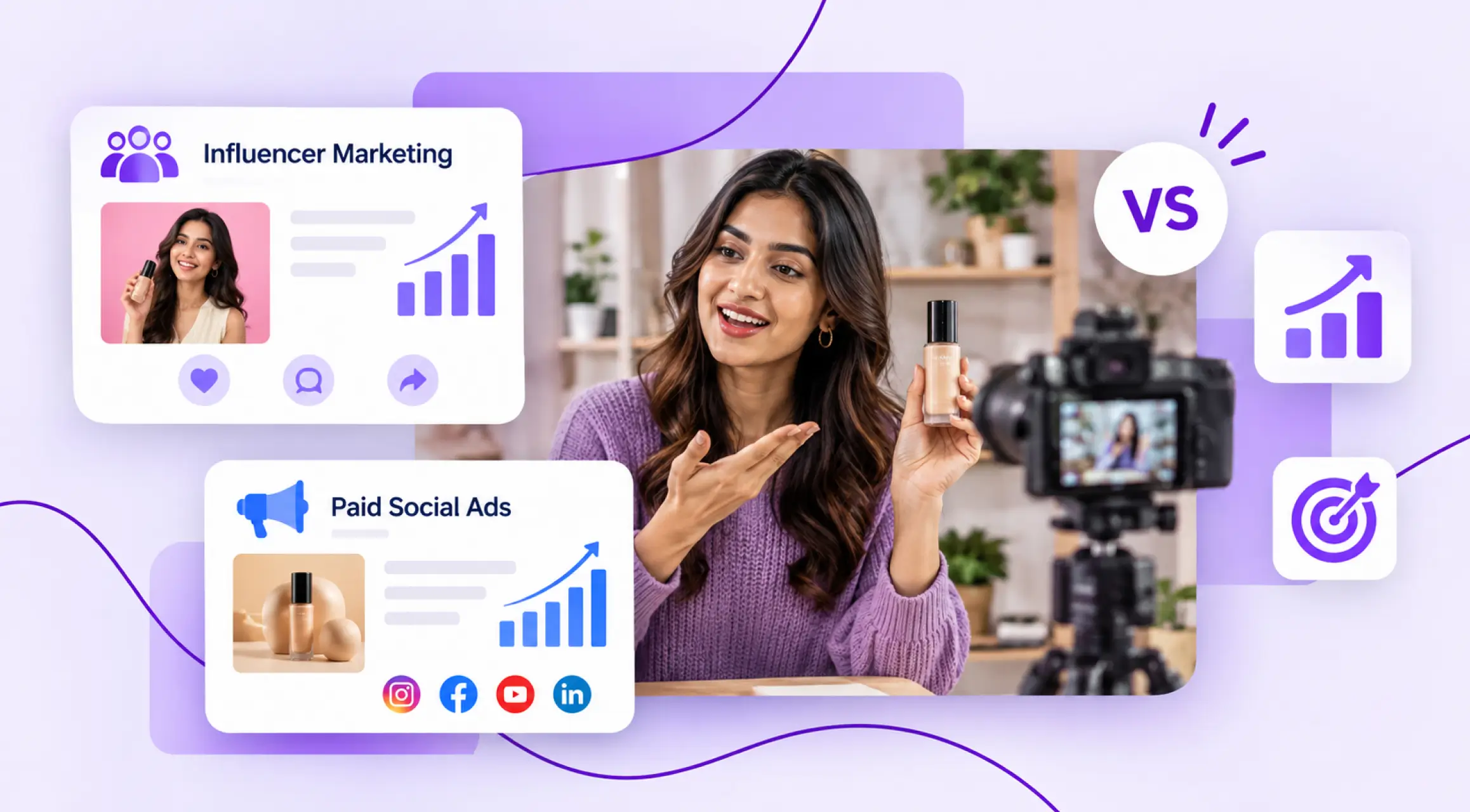
Growing a business on social media takes more than simply posting content or running advertisements. Brands need to build awareness, earn audience trust, and turn interest into meaningful business results. Two popular approaches that help achieve these goals are influencer marketing and paid social advertising.
Influencer marketing allows brands to collaborate with creators who have established audiences and can introduce products or services through relatable content. Paid social ads, on the other hand, help businesses reach specific audiences through targeted campaigns on platforms such as Instagram, Facebook, and LinkedIn.
Both approaches can support digital growth, but they work differently. While influencer marketing can help build credibility and community engagement, paid social advertising offers greater control over targeting, budgets, and campaign optimisation.
What Is Influencer Marketing?
Influencer marketing is a digital marketing strategy in which businesses collaborate with content creators to promote their products, services, or brand messages to an established audience.
Influencers can create product demonstrations, reviews, tutorials, testimonials, reels, stories, and other content that introduces a brand in a more personal and relatable way.
For example, a skincare brand might collaborate with a beauty creator to demonstrate how a product fits into a daily skincare routine. Similarly, an interior design studio could partner with a home décor creator to showcase a completed project and explain its design features.
Benefits of Influencer Marketing
- Builds Brand Trust and Credibility: Audiences may be more willing to explore a brand when they discover it through a creator whose content they already follow. Authentic and transparent collaborations can help businesses establish credibility.
- Reaches Relevant Communities: Working with creators in a specific niche helps brands connect with audiences interested in related topics, such as skincare, fitness, food, fashion, technology, or interior design.
- Generates Engaging Content: Influencer collaborations can produce product demonstrations, testimonials, tutorials, and lifestyle content that brands may also repurpose across their social media channels, subject to usage rights.
- Encourages Conversations and Discovery: Creators can introduce products naturally, answer common questions, and encourage their audiences to explore a brand further.
Limitations of Influencer Marketing
Influencer marketing does not guarantee sales or engagement. Results depend on the creator’s audience quality, content relevance, credibility, and campaign execution.
Businesses should also consider collaboration fees, product costs, content usage rights, audience authenticity, and the time required to identify suitable creators. Measuring direct sales can be challenging when tracking links, discount codes, and campaign attribution are not properly configured.
What Are Paid Social Ads?
Paid social advertising involves paying social media platforms to display promotional content to selected audiences. Businesses can use these campaigns to increase brand awareness, drive website traffic, generate leads, promote products, or encourage purchases.
Platforms such as Meta Ads, which include Facebook and Instagram placements, and LinkedIn Ads allow advertisers to select audiences, manage budgets, test creatives, and measure campaign performance.
For example, an e-commerce business can run Instagram ads to promote a product to relevant audience segments. A B2B company can use LinkedIn Ads to reach professionals based on their job roles, industries, or other available targeting criteria.
Benefits of Paid Social Ads
- Precise Audience Targeting: Businesses can reach audiences using available targeting options, such as location, interests, demographics, professional attributes, and engagement or website activity where supported.
- Greater Budget Control: Advertisers can set campaign budgets, adjust spending, and allocate resources according to campaign objectives and performance.
- Measurable Campaign Performance: Depending on the campaign setup and tracking, businesses can monitor impressions, reach, clicks, cost per click, leads, purchases, and return on ad spend.
- Faster Testing and Optimisation: Brands can test different creatives, messaging, audience segments, and landing pages to identify what performs best and make improvements based on results.
Limitations of Paid Social Ads
Paid social advertising requires a suitable budget, compelling creative content, effective targeting, and continuous optimisation. Poorly structured campaigns can spend money without generating meaningful business outcomes.
Ad performance can also change because of competition, creative fatigue, audience behaviour, platform changes, and landing-page issues. In addition, paid campaigns generally stop delivering when the advertising budget is paused, although their organic content or other indirect effects may continue to provide value.
Influencer Marketing vs. Paid Social Ads: Key Differences
Neither strategy is automatically better for every business. The right choice depends on your goals, target audience, budget, product, and customer journey.
Influencer Marketing vs. Paid Social Ads: Which Is Better for Your Business?
Choose Influencer Marketing When Your Goal Is Brand Awareness and Trust
Influencer marketing can be a strong option when your business needs to introduce a new product, reach a niche audience, demonstrate how something works, or create relatable brand content.
It can be particularly useful for lifestyle, beauty, fashion, food, wellness, and consumer brands, although the right creator partnership can benefit many other industries.
Example: A skincare brand collaborates with relevant beauty creators to explain product usage and introduce its range to new audiences.
Choose Paid Social Ads When You Need Targeted Reach and Measurable Results
Paid social ads may be more suitable when you want to generate website visits, collect leads, promote offers, drive e-commerce purchases, or reach a specific audience within a defined budget.
They also help businesses test different messages and audiences before committing more resources to a campaign.
Example: An e-commerce brand runs Meta Ads featuring product benefits, customer reviews, and a clear call to action to encourage purchases.
Choose Both When You Want a More Complete Growth Strategy
For many businesses, influencer marketing and paid social ads work best together rather than as competing alternatives.
Influencer content can introduce a brand and provide relatable product demonstrations. Paid advertising can then distribute selected content to wider or more specific audiences, subject to platform policies and the necessary permissions.
This combination connects discovery with targeted promotion and gives businesses more opportunities to engage potential customers.
Example: A brand collaborates with a creator to produce a product demonstration, evaluates the content’s performance, and uses the strongest creative in a paid campaign. Where supported, the brand may also use authorised creator-partnership ad formats.
How to Combine Influencer Marketing and Paid Social Ads
A coordinated strategy helps businesses use each channel according to its strengths.
1. Define Clear Campaign Objectives
Start by identifying what the campaign needs to achieve. Your objective could be brand awareness, engagement, website traffic, qualified leads, or sales.
The objective should determine how you select creators, develop content, structure advertising campaigns, and measure success.
2. Identify the Right Influencers
Do not choose creators based only on follower count. Review audience relevance, engagement quality, content consistency, authenticity, and alignment with your brand values.
A smaller creator with a highly relevant audience may be more useful than a larger creator whose followers are unlikely to become customers.
3. Create Content That Communicates Real Value
Influencer content should explain how the product or service addresses a genuine audience need. Paid social creatives should communicate the same value clearly, with a suitable format and call to action.
Avoid relying only on promotional claims. Useful demonstrations, educational content, product features, and answers to common questions can make the message more relevant.
4. Amplify Suitable Content Through Paid Campaigns
Once you identify promising content, consider using it in paid campaigns where permissions, platform features, and advertising policies allow.
Test different creative formats and messages rather than assuming that every influencer post will perform equally well as an advertisement.
5. Track Results Across Both Channels
Use campaign-specific links, UTM parameters, discount codes, platform reporting, and website analytics where appropriate. These tools can help you understand which activities contribute to traffic, leads, and purchases.
Remember that views, likes, and clicks do not always translate into business growth. Evaluate results against the campaign objective.
How to Measure the Success of Each Strategy
Choosing the right performance metrics helps businesses understand whether their marketing investment is generating value.
Influencer Marketing Metrics
- Reach and impressions: Understand how many people may have seen the content.
- Engagement rate: Evaluate interactions such as likes, comments, shares, and saves in context.
- Referral traffic: Measure visits generated through creator-specific links.
- Conversions: Track purchases, enquiries, or sign-ups attributed through suitable tracking methods.
- Cost per result: Compare campaign costs with the outcomes generated.
- Content value: Assess whether the content can be reused effectively under agreed usage rights.
Paid Social Advertising Metrics
- CPM (Cost Per Thousand Impressions): Measures the cost of generating impressions.
- CTR (Click-Through Rate): Shows the proportion of impressions that result in clicks.
- CPC (Cost Per Click): Measures the average cost of each click.
- CPL (Cost Per Lead): Measures the advertising cost per lead generated.
- Conversion Rate: Shows how many relevant visitors or clicks complete the desired action, depending on the measurement setup.
- ROAS (Return on Ad Spend): Compares tracked advertising revenue with advertising spend.
For a fair comparison, evaluate each strategy using its objective and the full cost involved. Influencer fees, production expenses, paid distribution, agency management, and conversion tracking may all affect the overall return.
Common Mistakes to Avoid
- Choosing influencers based only on followers: Large audiences do not automatically mean relevant reach or strong business results.
- Running ads without a clear objective: Campaigns need a defined purpose and suitable performance metrics.
- Using the same message everywhere: Content should suit the platform, audience, and stage of the customer journey.
- Ignoring landing-page experience: Even a strong advertisement may underperform if the website is slow, confusing, or lacks clear information.
- Measuring success only through likes and views: Engagement can be useful, but businesses should also consider qualified traffic, leads, sales, and profitability.
- Failing to disclose paid partnerships: Influencer collaborations should follow applicable advertising disclosure requirements and platform policies.
- Stopping analysis too early: Allow sufficient time and data to evaluate results, while monitoring spend and making adjustments when performance indicates a problem.
Final Thoughts: Choosing the Right Growth Approach
Influencer marketing and paid social ads serve different but complementary purposes. Influencer marketing can help businesses build familiarity, create relatable content, and connect with established communities. Paid social advertising provides more direct control over audience targeting, budget allocation, and campaign optimisation.
The best approach is the one that supports your business goals, reaches the right audience, and delivers measurable outcomes. Some businesses may benefit from starting with one channel, while others can gain more value from combining both into a coordinated strategy.
At TYT Studio, we help businesses develop data-driven digital marketing strategies that connect audience insights, creative communication, and measurable performance. Through social media marketing services, influencer-led campaign planning, Meta Ads, and performance marketing services, TYT Studio helps brands build visibility, engage relevant audiences, and work towards sustainable digital growth.
Frequently Asked Questions (FAQs)
Running ads is one thing. Knowing whether those ads are actually helping your business grow is another. You might spend ₹20,000 on Google Ads or Meta Ads and generate ₹1,00,000 in revenue. That...
In today's competitive digital landscape, businesses need more than advertisements to attract potential customers. They need to reach the right audience, communicate their value, and turn...
Imagine a potential customer asking an AI tool, “Which digital marketing agency can help my business generate more leads?” Instead of browsing dozens of websites immediately, they may receive a...
Just one more step to make your perfect choice. Book a demo today.


