

Google Ads vs Meta Ads: Why Your Business Needs Both for Digital Growth

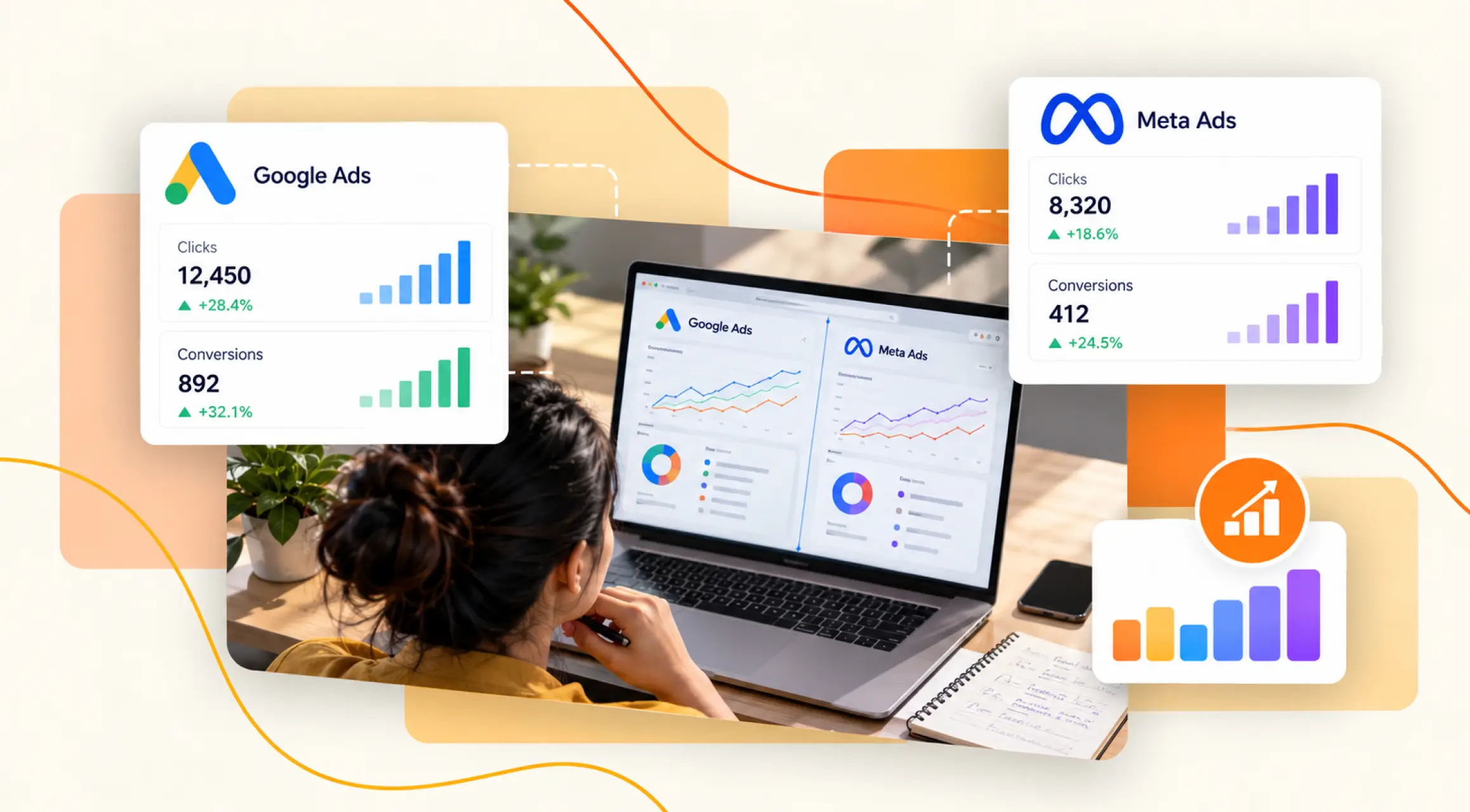
In today's competitive digital landscape, businesses need more than advertisements to attract potential customers. They need to reach the right audience, communicate their value, and turn interest into meaningful business results.
Two of the most widely used digital advertising platforms are Google Ads and Meta Ads. While both help businesses connect with potential customers, they work differently. Google Ads can reach people actively searching for products or services, while Meta Ads can introduce brands to audiences through platforms such as Facebook and Instagram, but come under performance marketing.
Understanding how these platforms differ can help businesses make better decisions about advertising budgets, audience targeting, and campaign objectives. Rather than treating them as competing options, businesses can use their complementary strengths to build a more effective digital advertising strategy.
In this blog, we explore how Google Ads and Meta Ads work, their key differences, their benefits for different businesses, and how to decide when to use each platform.
Understanding Google Ads and Meta Ads
Before comparing the two platforms, it is important to understand how each works and the role it plays in the customer journey.
What Is Google Ads?
Google Ads is an online advertising platform that allows businesses to promote their products and services across Google's advertising network. Depending on the campaign type, advertisements can appear in Google Search results, on YouTube, across Display Network websites, and in shopping-related placements.
One of Google Ads' main strengths is its ability to connect businesses with people searching for relevant information, products, or services.
For example, someone searching for an interior designer in Ahmedabad or a bulk packaging supplier may already have a specific requirement. A relevant advertisement can help a business appear while that person is exploring available options.
Google Ads can help businesses:
- Reach users searching for specific products or services.
- Generate enquiries, phone calls, and consultation requests.
- Promote products through shopping campaigns.
- Reach potential customers in selected locations.
- Measure advertising costs and conversion activity.
However, results depend on factors such as search demand, competition, keyword relevance, bidding strategy, and landing page quality. A campaign may attract clicks without generating valuable enquiries if the targeting or customer experience is not aligned with the business's offering.
What Is Meta Ads?
Meta Ads allows businesses to advertise across platforms such as Facebook and Instagram. Businesses can use image advertisements, videos, carousels, Stories, and Reels to communicate their products, services, and brand identity.
Unlike search advertising, Meta Ads can reach people who are not actively looking for a particular product or service. It helps businesses introduce their offerings, generate interest, and encourage audiences to explore what they have to offer.
For example, a skincare brand can showcase product benefits through short videos, while an architecture studio can use project walkthroughs to inspire potential clients.
Meta Ads can help businesses:
- Build brand awareness among relevant audiences.
- Showcase products and services through visual content.
- Generate leads and online sales.
- Introduce new products and offers.
- Re-engage eligible audiences who have previously interacted with the business.
Campaign performance depends on the relevance of the audience, the quality of the creative, the strength of the offer, and the experience users receive after clicking an advertisement.
Google Ads vs Meta Ads: Key Differences
Although both platforms support paid advertising, they differ in how users discover businesses, how advertisements are delivered, and which campaign formats are available.
The main distinction is the way each platform connects businesses with potential customers. Google Ads can help capture demand that already exists, while Meta Ads can help create awareness and interest before customers begin actively searching.
Neither platform is automatically better than the other. The right choice depends on the business model, customer behaviour, campaign objectives, and available budget.
Why Google Ads Is Important for Business Growth
Google Ads can be especially valuable when potential customers are actively researching solutions or comparing providers. It helps businesses appear at moments when users may already have a clear need.
1. Reach Customers With High Purchase Intent
Search queries often provide clues about what a person wants. Someone searching for a commercial packaging manufacturer, a skin-brightening face wash, or a local interior design service may already be considering a purchase.
By targeting relevant searches, businesses can connect with users whose requirements align with their offerings.
However, not every keyword indicates the same level of intent. A search for “what is interior design” has a different purpose from “interior designer for a 3BHK apartment.” Understanding this difference helps businesses select relevant keywords and write advertisements that match the user's expectations.
2. Generate Leads and Enquiries
Google Ads can support lead generation for service providers, B2B companies, consultants, and local businesses.
Depending on the campaign, potential customers may call, submit an enquiry form, request a quotation, or book a consultation.
The advertisement is only one part of the process. The landing page should provide relevant information, explain the offering clearly, and make the next step easy. A confusing website or lengthy enquiry form can discourage interested visitors from completing the action.
3. Target Relevant Locations
Location targeting can help businesses reach customers in the areas they serve.
For example, a local service provider may focus on a particular city, while a manufacturer may want to reach buyers in several commercial markets.
Businesses should align location settings with their actual service areas and sales capabilities. They should also review location performance regularly to understand where valuable enquiries originate.
4. Measure Campaign Performance
Google Ads provides reporting on impressions, clicks, conversions, and advertising costs. With accurate conversion tracking, businesses can evaluate whether campaigns are contributing to enquiries and sales.
Important metrics include:
- Click-through rate (CTR): The percentage of impressions that result in clicks.
- Cost per click (CPC): The average amount paid for each click.
- Conversion rate: The percentage of users who complete a desired action.
- Cost per lead (CPL): The advertising cost associated with generating a lead.
- Return on ad spend (ROAS): The attributed revenue generated for each unit of advertising spend.
These metrics should be interpreted together. A campaign with inexpensive clicks may still perform poorly if visitors do not convert or the resulting leads are not relevant.
Why Meta Ads Is Important for Business Growth
Meta Ads helps businesses introduce their offerings to audiences who may not yet be actively searching for them. Its visual formats can be useful for demonstrating products, communicating brand personality, and encouraging consideration.
1. Build Brand Awareness
Customers may need several interactions with a brand before they recognise it, understand its offering, or consider making a purchase.
Meta Ads can help businesses introduce themselves to relevant audiences through consistent messaging and creative content. This can be particularly useful for new businesses, product launches, and brands entering competitive markets.
Awareness campaigns should focus on reaching the right audience and communicating a clear message rather than simply maximising impressions.
2. Showcase Products and Services Visually
Some products and services are easier to understand when people can see them.
A restaurant can showcase its food and ambience, a skincare brand can demonstrate product application, and an interior design studio can present completed projects.
Images, videos, carousels, and Reels allow businesses to communicate benefits in an engaging format. Effective creatives combine visual appeal with a relevant message and a clear next step.
3. Test Different Messages and Creative Concepts
Meta Ads allows businesses to test different creative approaches, subject to campaign setup and available delivery options.
For example, an e-commerce brand might compare a product demonstration with a lifestyle-focused creative. A B2B company might test a product-benefit message against a demonstration of its manufacturing capabilities.
The purpose is to learn which approaches contribute to the campaign objective. High engagement does not necessarily mean high-quality leads or sales, so creative testing should be evaluated using meaningful business metrics.
4. Encourage Further Consideration
Potential customers do not always purchase or enquire during their first interaction with a business. They may need additional information, time to compare alternatives, or a reminder about an offering they previously explored.
Eligible retargeting campaigns can help businesses reconnect with previous website visitors or people who have interacted with their content, subject to applicable platform policies, consent requirements, and available tracking.
Follow-up advertisements should provide relevant information or a useful reason to return instead of repeatedly showing the same message without considering customer needs.
Why Google Ads and Meta Ads Work Better Together
Google Ads and Meta Ads can support different stages of the customer journey.
Imagine a business that relies only on Google Ads. It may reach people who are already searching for its products or services, but it could miss opportunities to introduce its brand to potential customers who have not started searching.
On the other hand, a business using only Meta Ads may build awareness and generate interest but miss some customers who are actively searching for a solution on Google.
Using both platforms can help businesses address these different situations.
- Meta Ads introduces the brand: It can help relevant audiences discover products and services.
- Google Ads captures active demand: It can connect the business with people searching for relevant solutions.
- The website supports decision-making: Visitors can explore offerings, review information, and enquire or purchase.
- Performance tracking guides improvements: Businesses can evaluate which activities contribute to qualified leads and sales.
The platforms do not automatically improve each other's performance. Their combined value depends on the campaign strategy, budget, message consistency, conversion tracking, and overall customer experience.
Common Mistakes to Avoid When Running Google Ads and Meta Ads
Running campaigns on both platforms is not enough. Businesses need to avoid mistakes that can waste budget or make performance difficult to interpret.
1. Using the Same Strategy on Both Platforms
Google Ads and Meta Ads serve different purposes. Search campaigns require relevant keywords and ad copy, while Meta campaigns often rely more heavily on creative concepts, audience relevance, and visual communication.
Each platform should have a strategy suited to its strengths and campaign objectives.
2. Focusing Only on Clicks and Reach
Clicks and reach indicate that an advertisement received attention, but they do not establish whether it generated business value.
Track outcomes that matter, such as qualified enquiries, purchases, consultation bookings, and revenue.
3. Sending Every Visitor to the Homepage
A homepage may not address the specific need that brought a visitor to the website.
Where appropriate, direct users to relevant product pages, service pages, or campaign landing pages that match the advertisement's message.
4. Ignoring Conversion Tracking
Without reliable tracking, businesses may struggle to identify which campaigns generate meaningful actions.
Configure suitable conversion events, verify that tracking works correctly, and compare platform reports with actual business records where possible.
5. Making Changes Without Enough Evidence
Frequent campaign changes can make it difficult to understand what is improving or reducing performance.
Give campaigns sufficient time and data for evaluation, while addressing clear technical issues, wasted spend, or significant performance problems when necessary.
6. Ignoring Lead Quality and Profitability
A campaign may generate many leads or report high revenue while still producing weak financial results.
Evaluate lead quality, sales conversion rates, acquisition costs, and profit margins before deciding whether to increase spending.
How to Build an Effective Google Ads and Meta Ads Strategy
A strong advertising strategy begins with business objectives and customer behaviour, not simply a decision to spend on both platforms.
1. Define Your Business Goals
Decide whether your priority is lead generation, online sales, brand awareness, website traffic, or market expansion. Clear goals help determine suitable campaign objectives and success metrics.
2. Understand Your Target Audience
Identify your customers' needs, locations, search behaviour, and purchasing considerations. Understanding how people discover and evaluate your offering can help determine the role each platform should play.
3. Assign a Clear Role to Each Platform
Use Google Ads where relevant search demand supports your goals. Consider Meta Ads when audience discovery, visual communication, or awareness-building can contribute to the customer journey.
4. Match Ad Messaging to the Customer Journey
Search advertisements should reflect relevant queries and direct users to suitable pages. Meta advertisements should communicate a clear benefit, attract attention, and provide a relevant next step.
5. Set Up Reliable Tracking
Measure actions that matter to the business, such as qualified leads, purchases, calls, and bookings. Where possible, compare advertising reports with CRM, sales, or e-commerce data.
6. Test and Optimise Campaigns
Test relevant elements such as ad copy, creative concepts, audiences, and landing pages. Use meaningful evidence to identify what deserves further investment.
7. Review Results and Adjust the Budget
Evaluate lead quality, conversion rates, sales, acquisition costs, and profitability at appropriate intervals. Increase spending when performance and business capacity support it, and investigate the reasons for weak results before making major changes.
How TYT Studio Can Help Your Business Grow Through Digital Advertising
Building an effective digital advertising strategy involves more than choosing between Google Ads and Meta Ads. Businesses need to understand their audiences, define clear objectives, communicate their value, and evaluate whether their marketing investment is contributing to meaningful results.
TYT Studio helps businesses approach digital growth through tailored advertising strategies, campaign optimisation, and integrated digital marketing services. By aligning campaign planning, creative communication, website experience, and performance measurement, businesses can make more informed decisions about their advertising investments.
The right strategy depends on each business's goals, budget, industry, and growth stage. Whether the priority is generating qualified leads, increasing online sales, or building brand awareness, the focus should remain on selecting suitable channels and measuring outcomes that matter.
Final Thoughts
Google Ads captures active search demand, while Meta Ads builds awareness and generates interest. The right choice depends on your business goals, audience, and budget.
TYT Studio combines strategic ad planning, creative campaigns, and performance tracking to help businesses generate quality leads and achieve growth.
Looking to improve your ad performance? Connect with TYT Studio today!
Frequently Asked Questions
Imagine a potential customer asking an AI tool, “Which digital marketing agency can help my business generate more leads?” Instead of browsing dozens of websites immediately, they may receive a...
Every business wants more website traffic, but traffic alone does not guarantee enquiries, sales, or business growth. A website may attract hundreds of visitors through search engines, yet...

Imagine gaining 2,000 new followers in a month. Your posts get likes, your reels get views, but your enquiries and sales remain the same. Is your marketing really working? Digital marketing is...
Just one more step to make your perfect choice. Book a demo today.


