Why Should Hotels Invest in SEO Instead of Depending Only on Booking Platforms?

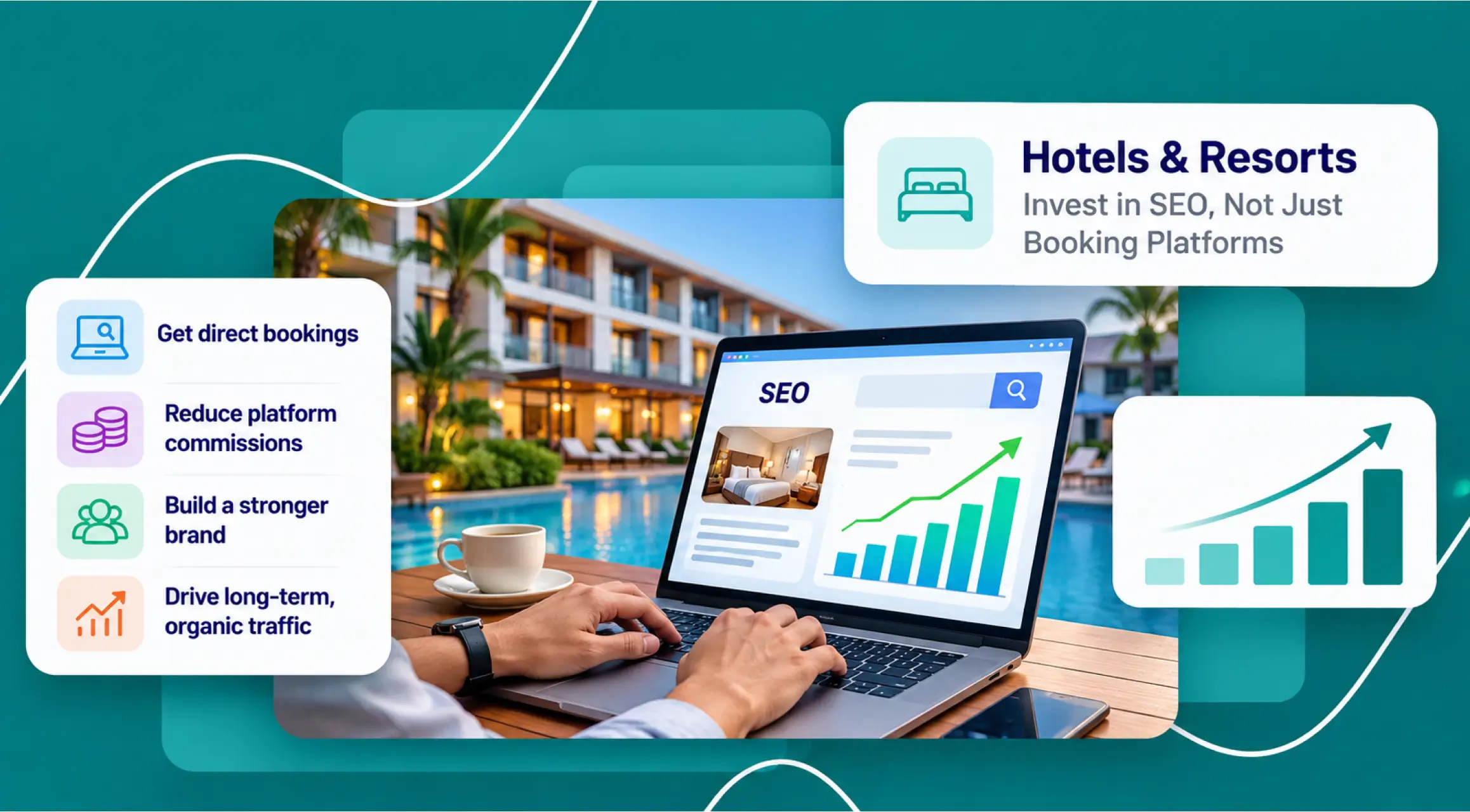
Today, travellers have more ways than ever to discover and book hotels. They search on Google, compare room prices, explore hotel websites, read reviews, and browse online travel agencies before making a reservation. Platforms like Booking.com, MakeMyTrip, and Agoda help hotels reach a wider audience, but depending only on these platforms can limit a hotel's ability to build its own online presence.
This is where Search Engine Optimisation (SEO) becomes important. A well-planned SEO strategy helps hotels appear in relevant Google searches, attract potential guests directly to their websites, and build long-term online visibility.
Instead of relying entirely on third-party booking platforms, hotels can use SEO and other digital marketing services to create an independent channel for attracting guests and generating direct bookings.
Reduce Dependence on Third-Party Booking Platforms
Online travel agencies (OTAs) provide hotels with access to a large customer base. However, bookings made through these platforms usually involve commission charges, which can affect overall profitability.
When hotels invest in SEO, they can attract visitors directly to their official websites. For example, someone searching for a luxury hotel in Vadodara or a business hotel near Vadodara railway station may discover a hotel's website through organic search results.
This gives hotels an opportunity to:
- Generate more direct booking enquiries.
- Reduce complete dependence on OTA platforms.
- Save on commissions for bookings made directly.
- Build stronger relationships with potential guests.
- Promote exclusive offers through their own websites.
SEO does not mean hotels should stop using booking platforms. Instead, it helps them create an additional booking channel that they can manage independently.
Build Long-Term Visibility on Google
Unlike paid advertisements, SEO focuses on improving a website's organic visibility in search engine results.
When travellers search for accommodation, they often use specific phrases based on their destination, budget, travel purpose, and preferred facilities.
For example:
- Best business hotel in Ahmedabad.
- Luxury hotel near Vadodara railway station.
- Hotels with banquet halls in Vadodara.
- Family-friendly hotels near popular tourist attractions.
- Hotels with restaurants and conference facilities.
By targeting relevant search terms, hotels can improve their chances of appearing when potential guests are actively looking for accommodation.
Professional search engine optimization involves keyword research, website optimisation, technical SEO, content creation, and local SEO. These activities help improve website relevance and visibility over time.
Attract Guests Who Are Actively Searching for Hotels
Not every traveller visits a booking platform first. Many begin their journey with a Google search.
A person planning a business trip may search for a hotel near a corporate area, while someone organising a wedding may look for hotels with banquet facilities.
SEO helps hotels reach these different audiences through relevant website pages and useful content.
Hotels can create dedicated pages for:
- Accommodation and room categories.
- Restaurants and dining experiences.
- Banquet halls and event venues.
- Corporate meetings and conference facilities.
- Wedding and celebration packages.
- Special offers and seasonal stays.
This approach helps hotels attract visitors with different requirements rather than depending on a single generic hotel listing.
Improve Local SEO and Google Business Profile Visibility
Local SEO plays an important role in hotel marketing because travellers frequently search for accommodation in a particular city or near a specific location.
For example, searches such as hotels near Sayaji Garden Vadodara or best hotel near Ahmedabad airport show that users are looking for options within a defined area.
Hotels can improve local search visibility by optimising their Google Business Profile with:
- Accurate hotel name, address, and contact details.
- Updated photographs of rooms, restaurants, and facilities.
- Correct website and booking links.
- Relevant business categories and service information.
- Regular updates and responses to guest reviews.
A well-maintained profile helps potential guests discover essential information and makes it easier for them to contact the hotel or visit its website.
Build Trust Through Your Own Hotel Website
A hotel's website is more than a place to display room prices. It is an opportunity to communicate the complete guest experience.
When travellers visit an official website, they can explore room interiors, dining options, amenities, event spaces, location details, and special packages in one place.
A professionally designed website should include:
- High-quality photographs and videos.
- Detailed room and facility descriptions.
- Easy navigation and mobile-friendly design.
- Clear contact information.
- Simple booking and enquiry options.
- Updated offers and packages.
This is where website design and development become important. A user-friendly website can make it easier for visitors to explore the property and take the next step towards booking.
Use Content Marketing to Reach Different Types of Travellers
SEO is not limited to adding keywords to website pages. Useful and relevant content can also help hotels attract people during different stages of travel planning.
For example, a hotel in Vadodara can publish blogs on topics such as:
- Places to visit in Vadodara during a weekend trip.
- How to choose a hotel for a business stay.
- Things to consider when booking a hotel for a family vacation.
- What to look for when selecting a wedding venue.
- Best dining experiences to explore during your stay.
Such content gives travellers useful information while introducing them to the hotel's location, facilities, and services.
Combining content marketing with SEO can help hotels attract organic website traffic and improve their online presence.
Strengthen Your Hotel Brand Beyond Booking Platforms
When a hotel depends only on booking platforms, its visibility is often limited to the listing format and rules of that platform. Its own brand identity may not receive the attention it deserves.
With an independent digital marketing strategy, hotels can communicate their unique experiences, service quality, dining options, hospitality, and facilities.
Social media marketing services can further support this by showcasing:
- Room and property tours.
- Food and dining experiences.
- Guest experiences and celebrations.
- Hotel events and seasonal offers.
- Behind-the-scenes hospitality moments.
Consistent branding across the website, search engines, and social media platforms helps hotels create a recognisable identity and stay connected with potential guests.
Combine SEO with Paid Advertising for Better Results
SEO is a long-term strategy, and improving organic search rankings takes time. Hotels can support their SEO efforts with paid advertising to reach potential guests more quickly.
For example, Google Ads can help promote hotels when people search for accommodation in a particular city. Meta Ads can help showcase rooms, restaurants, wedding venues, and special packages to relevant audiences.
A combination of SEO, performance marketing services, and paid advertising can help hotels balance long-term visibility with immediate promotional requirements.
By tracking website visits, enquiries, booking activity, and advertising costs, hotels can understand which marketing channels are contributing to their business goals.
Measure Website Performance and Direct Booking Opportunities
One of the biggest advantages of investing in your own digital presence is having better visibility into how visitors interact with your website.
Hotels can use analytics tools to understand:
- How many visitors reach the website through organic search.
- Which keywords bring relevant traffic.
- Which room or service pages receive the most visits.
- How many visitors click on booking or enquiry options.
- Which marketing campaigns generate enquiries.
These insights help hotels identify opportunities for improvement and make informed marketing decisions.
With the right analytics and conversion rate optimisation (CRO) approach, hotels can improve the website experience and make it easier for visitors to complete a booking or enquiry.
Why Should Hotels Choose a Professional Digital Marketing Partner?
Managing SEO, paid campaigns, website performance, and social media requires consistent planning and optimisation. A professional digital marketing agency can help hotels develop a strategy based on their location, target audience, services, and business objectives.
From local SEO and content planning to Google Ads, Meta Ads, and website development, the right agency can help hotels build a stronger online presence.
Which Is the Best Digital Marketing Agency for Hotels?
Finding the right digital marketing agency can make a significant difference in how a hotel attracts and connects with potential guests.
TYT Studio helps hotels build a strong digital presence through tailored marketing strategies that combine search engine optimisation, Google Ads, Meta Ads, social media marketing, and website development.
By understanding each hotel's unique offerings, target audience, and business goals, TYT Studio focuses on improving online visibility, strengthening brand awareness, and generating quality booking enquiries.
Final Thoughts
Booking platforms are useful for hotel discovery and reservations, but they should not be the only source of online bookings. Investing in SEO allows hotels to build their own digital presence, attract travellers through Google searches, and create more opportunities for direct enquiries.
By combining SEO with local search optimisation, informative content, social media marketing, and paid advertising, hotels can develop a more balanced digital marketing strategy.
The goal is not to replace booking platforms completely. It is to ensure that your hotel has its own online identity and does not depend entirely on third-party channels for visibility and bookings.
Frequently Asked Questions (FAQs)

When people need medical assistance, one of their first steps is often searching online. They may look for a nearby hospital, check a doctor's specialisation, explore available treatments, or...
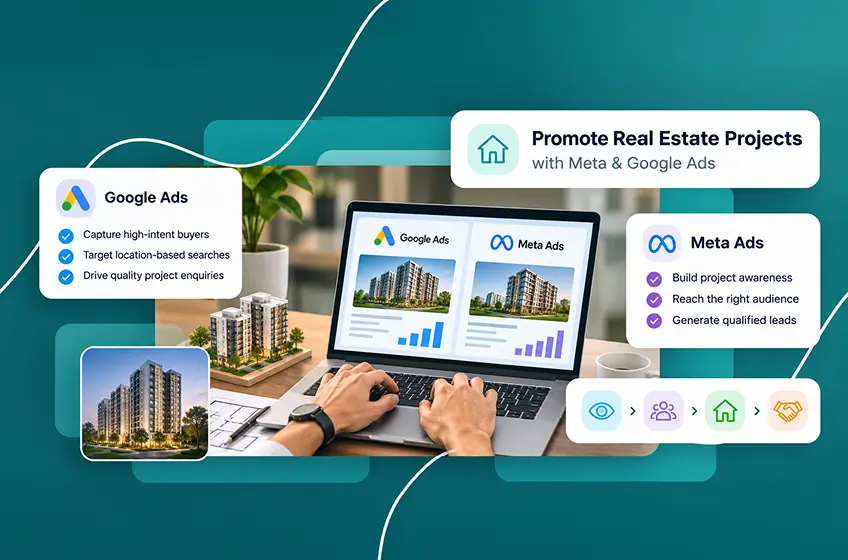
The real estate industry has become increasingly competitive, with buyers exploring multiple projects, comparing prices, checking locations, and researching developers before making a purchase...
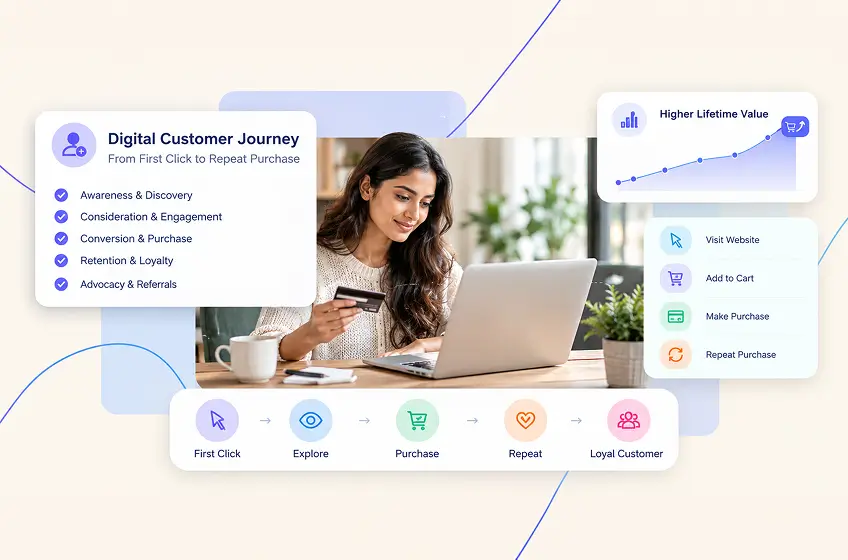
In digital marketing, a customer's decision to purchase is rarely influenced by a single interaction. Before choosing a brand, customers typically go through several stages of online research,...
Just one more step to make your perfect choice. Book a demo today.