

Digital Marketing Agency for Startups in India: Strategies to Build Brand Awareness and Accelerate Growth


Every startup begins with an idea. But turning that idea into a recognisable brand requires more than an innovative product or a promising business model. People need to discover your brand, understand what makes it different, and see a reason to choose it over established competitors.
For startups in India, this challenge is particularly important. Whether you are launching a D2C brand, a technology company, a SaaS platform, or a service-based business, building awareness and attracting the right audience are essential steps towards growth. With limited budgets, evolving business priorities, and increasing competition, every marketing decision needs to contribute to a clear objective.
This is where a specialised Digital Marketing Agency for Startups in India can make a difference. By combining search engine optimisation (SEO), social media marketing, content creation, website development, performance marketing, and data-driven insights, startups can establish a stronger digital presence and connect with relevant audiences.
However, successful startup marketing is not about being present on every platform or spending heavily on advertising. It is about understanding your audience, communicating your value clearly, and choosing digital marketing strategies that support your business at every stage of growth.
In this blog, we explore how startups can build brand awareness, improve online visibility, attract relevant audiences, and develop a scalable digital marketing strategy.
Why Do Startups in India Need Digital Marketing?
For a new business, gaining visibility is often one of the first major challenges. Potential customers may not know the brand exists, understand its offerings, or recognise how it differs from existing alternatives.
Digital marketing helps startups communicate their value proposition and make their products or services easier to discover.
Here is how a well-planned strategy can support startup growth.
- Build Brand Awareness from the Ground Up : A startup needs to establish its identity before it can build lasting customer relationships. Consistent branding, useful content, and a clear online presence help people recognise and understand the business.
- Reach the Right Audience : Digital channels allow startups to develop communication around specific customer segments, interests, locations, and business needs. A clearly defined audience helps make marketing efforts more relevant.
- Compete with Established Businesses : Startups may not have the budgets or brand recognition of larger competitors. However, focused SEO, strong content, relevant social media communication, and an effective website can help them establish a distinctive position in the market.
- Make Better Use of Limited Budgets : Startups need to prioritise spending. Digital marketing analytics can help identify which channels attract relevant visitors, generate engagement, and contribute to business objectives.
- Support Sustainable Growth : A combination of organic visibility, content marketing, customer engagement, and appropriate paid campaigns can create a foundation for long-term marketing efforts.
The key is to select strategies that match the startup's stage, resources, and growth priorities rather than following trends without a clear purpose.
Digital Marketing Strategies for Startups in India
An effective startup marketing strategy begins with a clear understanding of the product, target audience, competitive landscape, and business objectives. The following strategies can help startups build visibility and develop a more consistent approach to growth.
1. Search Engine Optimisation: Build Visibility Beyond Paid Ads
When people search for a product, service, or solution online, search engines often become an important starting point. If your startup's website does not appear for relevant searches, potential customers may discover competitors instead.
Search engine optimisation helps improve the structure, relevance, and discoverability of your website.
An effective SEO strategy for startups in India may include:
- Keyword research: Identify relevant search terms based on customer needs, product categories, and search intent.
- On-page SEO: Optimise page titles, meta descriptions, headings, URLs, and internal links.
- Technical SEO: Improve website speed, mobile usability, indexing, and site structure.
- Content optimisation: Publish useful pages and articles that answer audience questions.
- Local SEO: Improve location-based visibility for startups serving specific cities or regions.
- Performance tracking: Monitor organic traffic, search impressions, clicks, and relevant conversions.
For example, a startup offering inventory management software could create informative pages around inventory tracking, stock management, and retail operations. A D2C skincare startup could develop useful content about product ingredients, skincare routines, and customer concerns relevant to its offerings.
A professional SEO agency for startups can help prioritise these activities based on the startup's available resources and competitive environment.
SEO is a long-term investment. Results vary according to competition, website quality, content relevance, and implementation, so startups should avoid expecting immediate rankings or guaranteed outcomes.
2. Social Media Marketing: Turn Brand Discovery into Recognition
Social media can help startups introduce their brands, explain their offerings, and communicate with their target audiences.
However, an effective social media strategy requires more than posting regularly. The content should reflect the brand's identity, answer relevant questions, and give audiences a reason to engage.
A structured social media marketing agency for startups may include:
- Brand introduction and product education.
- Short-form videos explaining the product or service.
- Behind-the-scenes content that shows the people and process behind the business.
- Educational posts addressing customer problems.
- Product demonstrations and feature explainers.
- Relevant industry insights and updates.
- Community engagement and responses to genuine questions.
The right platform depends on the business model. Instagram may be suitable for visually driven consumer brands, while LinkedIn can be useful for B2B startups and professional services. YouTube may support detailed demonstrations, tutorials, and educational content.
Rather than trying to maintain a presence everywhere, startups should prioritise the platforms their intended audiences actually use.
Consistency in messaging, visual identity, and content quality helps build recognition over time.
3. Content Marketing: Give Your Audience a Reason to Trust Your Brand
When a startup enters a competitive market, people may have questions about its products, services, pricing, reliability, or expertise. Content marketing provides an opportunity to address these concerns before a purchase decision is made.
A useful content marketing strategy for startups may include:
- Educational blog articles.
- Industry guides and explainers.
- Product comparison pages.
- Frequently asked questions.
- How-to videos and tutorials.
- Downloadable resources.
- Email newsletters and relevant updates.
For example, a fintech startup could publish educational content about budgeting tools and digital payment processes. A SaaS startup could create tutorials that explain how its platform helps businesses manage everyday tasks.
The purpose is to answer genuine audience questions rather than produce large quantities of content without a clear direction.
For SEO, content should use relevant keywords naturally, include descriptive headings, link to related pages where useful, and provide information that is genuinely helpful to readers.
Consistently useful content can support organic discovery, strengthen brand familiarity, and help potential customers better understand a startup's value proposition.
4. Website Design and Development: Turn Interest into Action
Your website is often one of the first places potential customers visit after discovering your startup. It should communicate what the business offers, who it serves, and why the solution may be relevant.
An attractive design alone is not enough. A startup website must also be clear, functional, fast, and easy to navigate.
Important elements include:
- A clear value proposition on the homepage.
- Well-organised product or service pages.
- Mobile-responsive design.
- Fast loading speeds.
- Clear calls to action.
- Easy-to-find contact information.
- Relevant product demonstrations or supporting content.
- Secure forms and appropriate privacy disclosures.
- Analytics to understand visitor behaviour.
For startups offering software, a demo request or product walkthrough may be a suitable next step. For an e-commerce business, clear product descriptions, a smooth checkout process, and transparent delivery information can improve the shopping experience.
A well-planned website design and development strategy helps reduce confusion and makes it easier for visitors to take the next appropriate step.
Startups should also consider conversion rate optimisation (CRO), which focuses on improving the percentage of visitors who complete a desired action, such as requesting a demo, submitting an enquiry, or making a purchase.
5. Performance Marketing: Make Every Campaign Work Towards a Goal
Startups often need to balance brand awareness with immediate business priorities. Performance marketing can help measure campaign activity against defined objectives and available budgets.
Depending on the business model and the advertising activities permitted for its industry, a performance marketing strategy for startups may involve search advertising, social media advertising, retargeting, or other paid digital channels.
Before launching a campaign, startups should establish:
- The primary objective, such as awareness, qualified enquiries, or purchases.
- The intended audience.
- The offer or message being communicated.
- The campaign budget.
- The landing page experience.
- The metrics used to assess performance.
Useful measurements may include cost per click, conversion rate, cost per acquisition, return on ad spend, and the quality of enquiries generated.
For example, a startup launching a new product could test different messaging approaches to understand which one attracts the most relevant audience. A B2B startup could evaluate campaigns based on qualified demo requests rather than total clicks.
Paid campaigns can provide faster access to audiences, but results depend on targeting, creative quality, pricing, competition, and the landing page experience. They should complement a broader marketing strategy rather than replace the development of long-term brand assets.
How to Build a Digital Marketing Strategy Based on Your Startup's Growth Stage
A startup's marketing requirements evolve as its product, audience, and business model develop. A strategy that works during launch may need to change as the company expands.
Stage 1: Early-Stage Startup - Establish the Foundation
At this stage, the priority is to explain the product clearly and validate the target audience.
Focus on:
- Defining the ideal customer profile.
- Establishing brand positioning.
- Creating a functional website.
- Setting up analytics and search monitoring.
- Researching relevant SEO keywords.
- Developing initial educational content.
- Identifying the most relevant social media platforms.
The objective is to build a strong foundation and understand how the intended audience responds to the offering.
Stage 2: Launch and Awareness - Introduce the Brand
Once the foundation is in place, the focus shifts towards making the brand easier to discover.
Priorities may include:
- Publishing relevant website content.
- Introducing the brand through suitable digital channels.
- Sharing product demonstrations and educational resources.
- Building relationships with relevant communities.
- Testing appropriate acquisition strategies.
- Monitoring audience engagement and website behaviour.
The goal is to understand which messages and channels attract relevant attention.
Stage 3: Growth - Improve Acquisition and Conversion
As the startup gathers more data, it can refine its marketing activities based on actual performance.
Potential priorities include:
- Improving SEO content and technical performance.
- Optimising important landing pages.
- Evaluating suitable paid campaigns.
- Strengthening conversion tracking.
- Improving enquiry qualification.
- Developing customer retention initiatives.
The focus shifts from simply increasing visibility to attracting relevant audiences and improving the customer journey.
Stage 4: Expansion - Build a Scalable Marketing System
When the business is ready to enter new markets or expand its offerings, marketing needs become more complex.
Priorities may include:
- Expanding relevant content coverage.
- Strengthening brand consistency across markets.
- Improving CRM and reporting workflows.
- Developing customer segmentation.
- Optimising acquisition costs.
- Coordinating campaigns across suitable channels.
The right priorities will depend on the startup's maturity, resources, and market opportunities. Growth stages are not fixed timelines; businesses may move between them as their needs change.
Common Digital Marketing Mistakes Startups Should Avoid
A startup can invest time and money in marketing without seeing meaningful progress if its strategy lacks focus.
Here are some common mistakes to avoid.
- Trying to Reach Everyone : A broad message often fails to communicate why a product matters to a particular customer. Define the intended audience and explain how the offering addresses its needs.
- Choosing Channels Without a Clear Objective : Being active on every platform can spread limited resources too thinly. Prioritise channels based on audience behaviour and business objectives.
- Ignoring SEO Until Later : Building a search-friendly website and useful content early can establish a foundation for organic visibility. Waiting until the website becomes difficult to restructure may create additional work.
- Spending on Ads Without Proper Tracking : Campaigns should have clear objectives and reliable measurement. Without appropriate tracking, it becomes difficult to understand whether spending contributes to meaningful business outcomes.
- Publishing Content Without a Strategy : Content should address relevant audience questions, support brand positioning, and connect naturally with appropriate website pages. Publishing frequently is not a substitute for usefulness.
- Neglecting the Website Experience : Even effective marketing may struggle if the website is slow, confusing, or difficult to use on mobile devices. Review the complete journey from discovery to conversion.
- Expecting Instant Results : SEO, brand recognition, and customer trust take time to develop. Startups should establish realistic expectations and review performance consistently rather than making decisions based on short-term fluctuations alone.
Avoiding these mistakes helps businesses use limited marketing resources more effectively and develop a stronger foundation for future growth.
Best Digital Marketing Agency for Startups in India
Finding the best digital marketing agency for startups in India begins with understanding what your business needs to achieve.
A newly launched startup may need help establishing its brand identity, developing a professional website, and building initial awareness. A growing business may need a more structured SEO strategy, stronger content marketing, conversion optimisation, or better performance tracking.
TYT Studio is a digital marketing and branding agency based in Ahmedabad, India, offering services across SEO, Google Ads, Meta Ads, social media marketing, website design and development, branding, content creation, performance marketing, and analytics.
For startups, these services can be brought together into a strategy that reflects the business's stage, audience, budget, and growth priorities.
The process should begin with understanding the product, identifying the intended audience, evaluating the existing digital presence, and setting realistic objectives. From there, the strategy can prioritise relevant channels, establish measurable indicators, and adapt as the business develops.
Rather than selecting an agency solely based on promised results or the number of services offered, startups should evaluate its strategic thinking, creative capabilities, transparency, and ability to connect marketing activities with business objectives.
Final Thought
Building a successful startup requires more than launching a good product. People need to discover the brand, understand its value, and feel confident enough to take the next step.
A structured digital marketing strategy can help make that journey clearer. SEO improves discoverability, content marketing answers audience questions, social media supports brand recognition, and website optimisation creates a smoother user experience. Performance marketing and analytics can then help businesses evaluate their activities and make more informed decisions.
The most effective approach is not necessarily the one with the largest budget or the greatest number of campaigns. It is the one that connects the right audience with the right message through the most suitable channels.
With a clear strategy, consistent execution, and regular performance reviews, startups can build brand awareness, strengthen their digital presence, and create a more sustainable foundation for growth.
Frequently Asked Questions (FAQs)

The travel and tourism industry in India is growing rapidly, with travellers increasingly relying on search engines, social media platforms, and online reviews to discover destinations, compare tour...

Legal expertise is built on knowledge, experience, and trust. But in India's competitive legal landscape, professional expertise alone may not be enough to help a law firm reach the right audience...
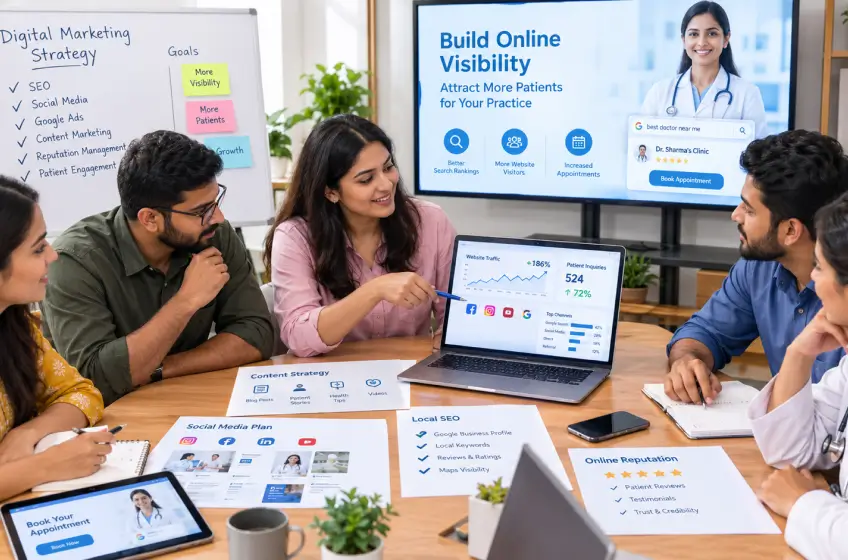
Healthcare is built on expertise, trust, and the right care. But in India's competitive healthcare industry, medical expertise alone isn't always enough. Doctors also need to be visible online,...
Just one more step to make your perfect choice. Book a demo today.


